How to Write a Business Proposal (Structure, Sections, and Examples)
InkDraft
6/21/2026
A business proposal is the document that turns an interested prospect into a signed client. The job is not to list everything you do. It is to make one decision easy: should the client move forward with you, on this scope, at this price.
Here is a structure that works for most service businesses, and the reasoning behind each section.
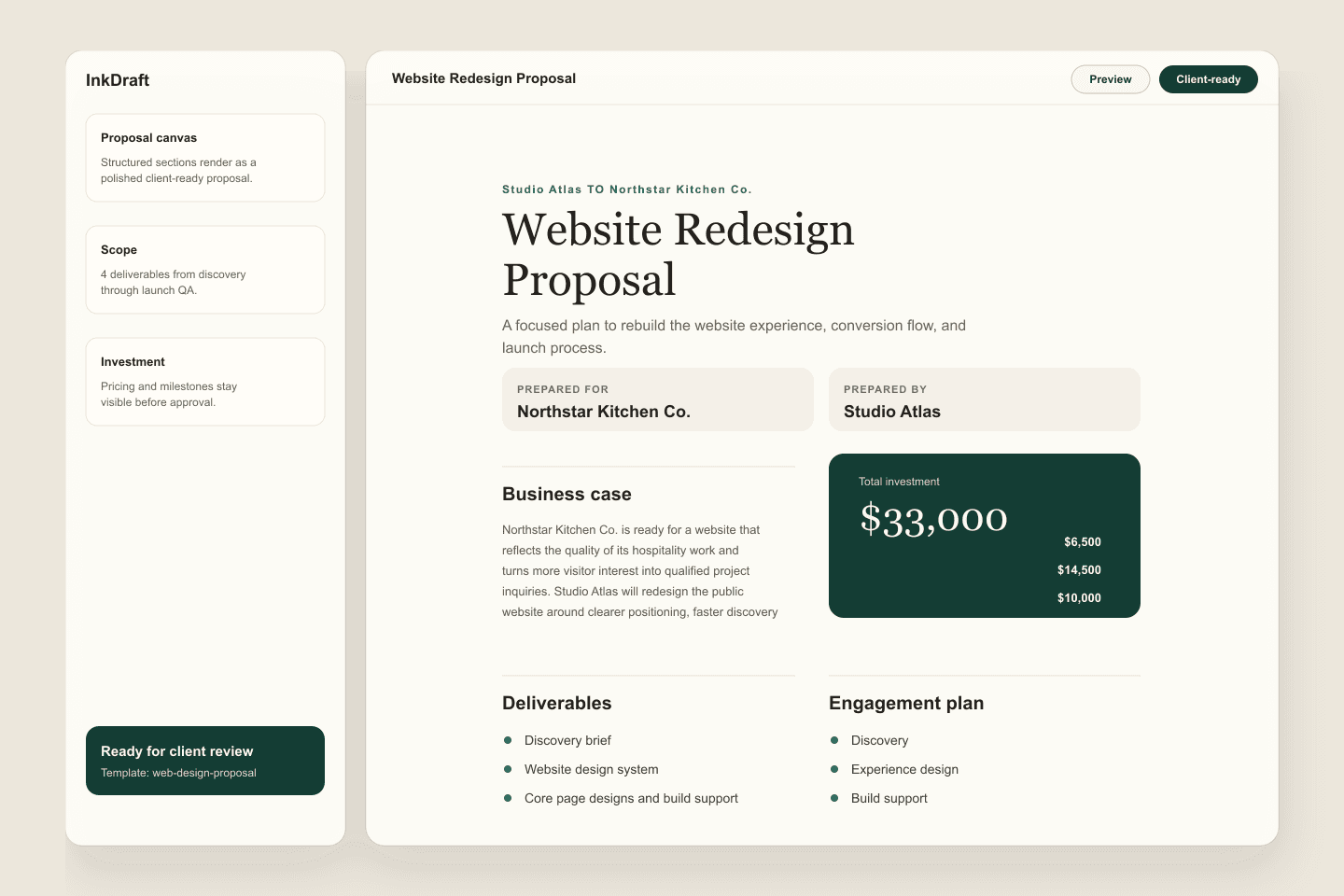
Write The Decision Before You Write The Sections
Every proposal answers four questions. Write the answers down before you open a template. If the engagement started with a discovery call, the answers should already be confirmed in writing by the client, which is the point of what to send after a discovery call.
- What outcome is the client buying?
- What work is included, and what is not?
- What will it cost?
- What happens after they approve?
If a section does not help answer one of those four, cut it or move it to an appendix. Most bloated proposals are bloated because nobody applied this test.
Start With The Executive Summary
Write the summary last but put it first. In a few sentences, state the client's problem, the outcome you will deliver, and the headline investment. A busy decision-maker should understand the offer before reading another word. Everything after this section exists to support it.
Frame The Problem In The Client's Words
Before you describe your solution, show that you understand the situation. Restate the problem using the client's language, not your service categories. When a client sees their own problem described accurately, the rest of the proposal reads as a credible answer rather than a generic pitch.
Make The Scope Concrete
Scope is where proposals win or lose trust. Use deliverables, exclusions, and client dependencies instead of broad promises. Say exactly what is included, what is not, and what you need from the client to deliver on time.
"Website redesign" is too loose to survive a disagreement six weeks in. A clearer scope names discovery, information architecture, responsive page designs, implementation support, and launch QA, and then says what is excluded, such as paid media or ongoing content production. The free business proposal template separates these into clear sections so nothing is left ambiguous, and the web design proposal template shows the same structure applied to a specific engagement.
Tie Pricing To The Work
Present a single total, then break it into phases or line items so the client can see what each part covers. Link payments to milestones the client can verify, such as acceptance, a design approval, or go-live. This is easier to approve than one unexplained number, because the number has a reason the client can repeat to whoever signs off internally.
That does not mean every engagement needs complex billing. The consulting proposal template and software development proposal template tie payments to visible milestones, while the freelance contractor proposal template does the same with a deposit and staged payments. For a deeper look at pricing structure, see how to price a proposal.
Add Qualifications And Proof
Keep this short. A couple of relevant case studies, the people who will do the work, and one or two clear differentiators are enough. Proof supports the decision; it should not bury it.
Close With Terms And A Clear Next Step
State what acceptance means: the expiration date, payment timing, ownership, and whether a separate services agreement applies. Keep the language practical, and avoid asserting legal conclusions your business cannot stand behind. End with one obvious next step so the client knows exactly how to say yes.
Terms are also what decide whether the signed document stands on its own or needs a separate agreement behind it. That question is worth understanding before you send: see is a signed proposal a contract.
Start From A Template
You do not need to build this structure from scratch. Start with the business proposal template for a general engagement, or pick a closer match like the sales proposal template or consulting proposal template. Adjust the scope and pricing, then send a version your client can review and sign.
Related templates
More from the blog
How to Price a Proposal (Fixed, Retainer, and Milestone Pricing)
How to price a client proposal so the number is easy to understand, easy to approve, and tied to real deliverables.
How to Write a Scope of Work
A scope of work defines what will be delivered, when, and under what conditions. How to write one that prevents scope creep, protects both sides, and keeps the project on track.
Is a Signed Proposal a Contract?
Yes, when it has offer, acceptance, consideration, and definite terms. The four tests, the difference between a proposal and a contract, and when a signed proposal is not enforceable.